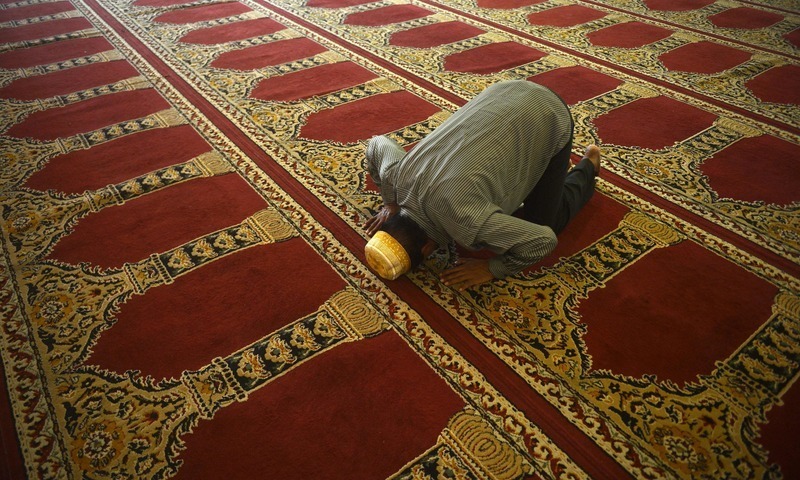
Sri Lanka maintains high alert for attacks ahead of Ramazan

Sri Lankan officials said on Tuesday security forces were maintaining a high level of alert after intelligence reports that militants were planning fresh attacks before the start of the holy month of Ramazan.

The head of the police ministerial security division had said in a letter to lawmakers and other officials that attacks were expected on Sunday or Monday by militants dressed in army uniform.

There were no attacks on Sunday and Monday but security across Buddhist-majority Sri Lanka remains ramped up, with scores of suspected militants arrested since the April 21 attacks on hotels and churches that killed more than 250 people, including 42 foreign nationals.

“Security will stay tight for several days because military and police are still tracking down suspects,” a senior police intelligence official said on Tuesday.

Another government source told Reuters a document has been circulated among key security establishments instructing all police and security forces across the Indian Ocean island nation to remain on high alert because the militants were expected to try a strike before Ramazan.

Ramazan is scheduled to begin in Sri Lanka on May 6.

The government has also banned women from wearing face veils under an emergency law that was put in place after the Easter Sunday attacks.

Authorities suspect members of two previously little-known groups — National Thawheedh Jamaath (NTJ) and Jammiyathul Millathu Ibrahim — of carrying out the attacks, although the Islamic State extremist group has claimed responsibility.

Authorities believe Zahran Hashim, the founder of NTJ, was the mastermind and one of the nine suicide bombers.


The post Sri Lanka maintains high alert for attacks ahead of Ramazan appeared first on ARYNEWS.


from ARYNEWS http://bit.ly/2LeGQr3

Comments

Popular posts from this blog

Rouhani calls Imran, discusses resumption of trade

ISLAMABAD: Pakistan and Iran on Wednesday discussed full resumption of bilateral trade, which was halted last month because of the Covid-19 pandemic. “The two sides stressed the need to reactivate borders and border markets and strengthen trade ties by following health guidelines,” a statement issued by the Iranian presidency on the telephonic conversation between Prime Minister Imran Khan and President Dr Hassan Rouhani said. President Rouhani had called the prime minister for Ramazan greetings. Border trade between the two countries was suspended after a meeting of the National Security Committee (NSC), held on March 13, decided to close all borders because of the pandemic. Islamabad partially relaxed the restrictions on April 21, allowing the import of certain food items and provision of petrol and diesel to the border areas. Cargo traffic from Iran was allowed for three days every week. Cargo movement between the two countries takes place through five border crossings — Taftan...

Today’s outlook: Sindh CM discusses reopening markets with PM Khan

Here are some of the stories we are expecting to follow today (Thursday): Sindh Chief Minister Murad Ali Shah will take Prime Minister Imran Khan into confidence over reopening shops and markets across the province. The reopened markets will have to follow SOPs. Sindh Transport Minister Awais Qadir Shah will discuss SOPs with transporters for resuming public transport in the coming days. The meeting will be held at the Sindh Assembly building at 1:30pm. The Oil and Gas Regulatory Authority has proposed a price cut of Rs20.68 per litre for petrol in its summary. Imam-e-Kaaba Sheikh Abdul Rahman Al-Sudais has said Masjid Al Haram and Masjid Al Nabawi will be reopened for worshipers soon. He said the Kaaba is being sterilised using latest technologies. Punjab Chief Minister Usman Buzdar will head various meetings during his visit to Bahawalpur. As of Thursday, Pakistan has reported more than 15,500 confirmed coronavirus cases. ICYMI: An amendment to the National Accountability Or...

If Pakistani elderly self-distance infections could drop 30%: study

If we do nothing, COVID-19 could infect 206 million Pakistanis and kill 691,000. This is the estimation of researchers from the Imperial College London COVID-19 Response Team who have published country-wise projections in a March 26 report ‘ The Global Impact of COVID-19 and Strategies for Mitigation and Suppression ’ Furthermore, using an infection fatality rate from China, this means 4.4 million Pakistanis would require hospitalisation and from among those, 917,000 individuals would require critical care. Pakistan has a population of 220 million people. The research is based on the infection fatality rate from China, country health care system capacities and that one person with coronavirus is likely to infect 3 others. (You can find the excel sheet with Pakistan numbers here: Imperial-College-COVID19-Global-unmitigated-mitigated-suppression-scenarios.xlsx ) Forty-seven researchers crunched the numbers and made these projections to give countries, including Pakistan, some idea of...