
LONDON: British water and power firms are trying to soothe nerves over nationalisation in the event of a Labour government, although some fund managers and lawyers doubt so-called Corbyn-proofing will work.
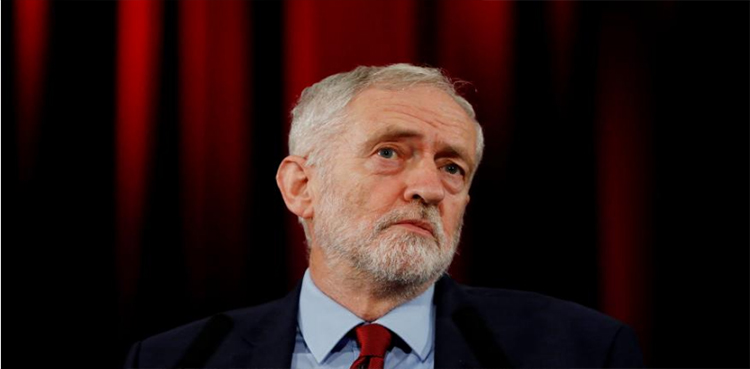
Jeremy Corbyn, the opposition leader, has said the state would take control of Britain’s water, electricity, gas and railway operators, as well as Royal Mail and Royal Bank of Scotland if Labour wins power.
The privatisation of utilities, which began in the 1980s under Margaret Thatcher’s Conservatives, has been a divisive issue. While supporters say consumers get a better deal, critics argue that there is no place for profit in public services.
Now, with Labour gaining in the polls and a general election seen as more likely following a delay to Britain’s European Union departure, companies and investors are taking the possibility of nationalisation seriously.
Thames Water, for instance, added a clause to its bonds to ensure holders are repaid immediately should it be nationalised.
Bankers say this reflects demand for extra protection as investors grow more wary about British utilities.
While references to nationalisation as a default event for utility companies are not new, several lawyers said they are seeing a surge in company inquiries about inserting such clauses, as well as an increase in investment firms seeking advice.
Reuters reported last year that many foreign pension and investment funds were opting to shift their stakes in UK utilities to jurisdictions such as Hong Kong, where bilateral treaties protect against asset expropriation. Lawyers said this process was continuing.
“Your biggest fear as a bond investor is if your bond gets nationalised for less than market value,” Dan Neidle, partner at Clifford Chance, said.
“Labour have said they will honour the debts of nationalised businesses, but a large number of investors and infrastructure businesses remain concerned. The discussions we are having are increasing over time,” Neidle added, without giving any names.
Some companies began seeing higher borrowing costs last year and a London-based capital markets banker highlighted the case of Western Power Distribution, which was unable to tighten the pricing on a 350 million pound bond in October.
“We have seen some foreign investors hold their hands up and say we are not looking at UK infrastructure,” the banker said. “There were a lot of questions about Corbyn on the roadshow.”

IMPOSSIBLE TASK?
But can investors really insure against nationalisation?
Some say a Labour government could simply change the law to annul a Thames Water-type provision and swap any cash due for government-issued gilts.
“It is probably impossible to ‘Corbyn-proof’ a corporate’s debt in this way,” one capital markets lawyer said.
Harry Richards, who co-manages Jupiter Asset Management’s Corporate Bond Fund, said that whatever it may say before an election, a Labour government may ultimately not want to risk undermining business confidence with a change to the law.
“Historically the UK has been viewed as a bit of a golden child in terms of enforceability of UK law and how the UK law is valued … it would very much undermine that.”
Nevertheless Richards went underweight in British utilities midway through last year, arguing that nationalisation risk means they are no longer a safe bet.
Another factor which may make Labour think twice about a wide nationalisation plan is the expense.
S&P Global puts the cost of taking the water and power sectors back into state hands at some 160 billion pounds ($210 billion), based on the regulated asset value of the companies.
A Labour party spokesperson said: “The benefits of taking water into public ownership are clear: ending rip-off prices and excessive dividends for private companies and investing in the long-term future of our economy.”
CORBYN DISCOUNT?
While it is difficult to disentangle the Corbyn effect on share and debt prices from the impact of Brexit or regulatory squeezes, analysts say it is definitely there among utilities, which comprise around a fifth of the UK corporate bond market.
Credit Suisse strategist Mark Freshney noted shares in utilities fell by around 35 percent in the nine months after Labour outlined its plans in May 2017.
“The nationalisation debate has taken something like 10-15 percent off the share prices,” Freshney said. “At the moment there is probably a 5-7.5 percent discount in the shares.”
Any Corbyn discount is most visible in bonds issued in a holding company structure often used by utilities to raise debt.
These “holdcos” are unsecured, lack operating licenses and assets and their bonds, such as those issued by Western, rank lower than the operating companies, known as “opcos”.
Jonathan Constable, an analyst at Legal & General Investment Management, estimates that UK-regulated opco debt is in the region of 70-100 billion pounds, and holdco debt — the most vulnerable category — equates to just 5 percent of that.
“We have a preference for opco debt, which is safer in a nationalisation event, it could be viewed as a government proxy in event of a nationalisation, in which case the price could go up,” Jupiter’s Richards said.
This dichotomy is visible in bonds from Anglian Water and its holdco Osprey Finance. Similarly, Kelda Finance has seen its bonds underperform that of its opco Yorkshire Water.
“It’s largely down to people refusing to invest as long as the nationalisation overhang is there,” said Constable.
The post British firms take nationalisation precautions appeared first on ARYNEWS.
from ARYNEWS http://bit.ly/2IYZ2SG
Comments
Post a Comment